Reclaimed: The Neighbors Turning Augusta's Forgotten Spaces Into Places That Actually Matter
The Spaces Nobody Was Using — Until They Did
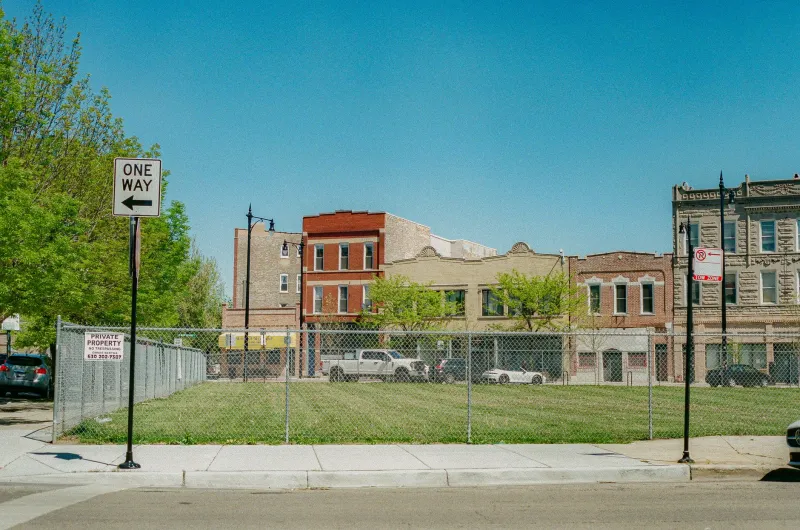
There's a stretch of green space on the east side of Augusta that, for years, most people drove past without a second thought. No playground equipment. No benches. Just a patch of city-owned grass that collected litter and not much else. Today, it hosts a weekly farmers market, a monthly outdoor movie night, and a community garden that's fed dozens of families.
Nothing about that transformation came from a government grant or a developer's pitch deck. It came from a handful of neighbors who got tired of waiting.
"We kept saying, 'somebody should do something about this place,'" says Darnell Watkins, one of the residents who helped organize the effort. "Then one day we just realized — we are somebody."
That shift in thinking, small as it sounds, is driving a broader movement across Augusta. Residents, block associations, and neighborhood groups are looking at the city's forgotten corners — vacant lots, underlit alleys, crumbling park facilities — and seeing something different: potential.
Grassroots, Not Glamorous
Let's be honest: this work isn't flashy. There are no ribbon cuttings with politicians holding oversized scissors. Most of the labor happens on Saturday mornings when people could easily be doing something else.
Tamika Reeves, who coordinates a neighborhood activation effort in one of Augusta's older residential corridors, describes the early days as "basically just showing up and hoping someone else would too."
"The first cleanup day, it was me, my cousin, and a guy from down the street who I'd never even properly met before," she says with a laugh. "We filled maybe four trash bags and called it a win."
But momentum builds. More people came the next week. Someone donated a bench. A local nursery contributed plants. A church group helped install a small mural on an adjacent wall. The space started to look like it belonged to someone — because it did.
This pattern repeats itself in neighborhoods across Augusta. Small interventions create visible change. Visible change attracts attention. Attention draws more hands. And slowly, a neglected corner becomes a reason to linger.
Why It Matters Beyond the Aesthetics
It's easy to frame this as beautification — and sure, Augusta's neighborhoods do look better when vacant lots aren't eyesores. But the community leaders driving these projects are quick to point out that the stakes go well beyond curb appeal.
Research consistently shows that well-used public spaces reduce social isolation, lower crime rates, and improve residents' sense of safety and belonging. In Augusta, where some neighborhoods have faced decades of disinvestment, those outcomes aren't abstract — they're urgent.
"When people don't have a reason to be outside together, they stop knowing each other," says Marcus Hill, who runs a civic engagement nonprofit in Augusta. "And when neighbors don't know each other, everything gets harder — public safety, mental health, even economic stuff. The space is almost secondary. What we're really building is connection."
That's a point that resonates with longtime Augusta resident Gloria Chen, whose block association transformed a narrow alley behind a row of older homes into what neighbors now call "the passageway" — a lit, painted walking path lined with potted plants maintained by residents on either side.
"It used to feel like a place to avoid," Chen says. "Now kids cut through it on the way home from school and people stop to water the plants. It sounds simple, but it changed how this block feels."
The Challenges Are Real
None of this happens without friction. Navigating city permitting for public space use can be a maze, even when intentions are clearly good. Liability questions around events on public land create headaches. Funding — even for modest projects — requires hustle.
Watkins describes spending months trying to get clarity on who actually owned the parcel his group wanted to activate. "You call one department, they send you to another. It's discouraging if you let it be," he says. "We just kept going."
Other organizers point to the challenge of sustaining momentum after the initial excitement fades. Volunteer fatigue is real, and not every neighborhood has the same density of people with time to spare.
Still, the groups that have pushed through those early obstacles tend to develop something durable — a core of committed neighbors who've built real relationships through the work itself. The project becomes the community, not just the result.
What Augusta Could Learn From Its Own Backyard
City planners and economic development advocates are increasingly paying attention to what these grassroots activations accomplish — and at what cost.
A community-activated park or lot typically costs a fraction of what a city-managed renovation runs, while generating something city projects often struggle to produce: genuine neighborhood ownership. Residents who helped build a space tend to protect it, maintain it, and keep showing up for it.
"There's a lesson here for how Augusta thinks about development more broadly," says Hill. "The community already has ideas, energy, and investment. The question is whether the systems around them make it easier or harder to act."
Some advocates are pushing for clearer city pathways for community land activation — streamlined permitting, modest seed funding programs, and better coordination between neighborhood groups and municipal departments. The goal isn't to bureaucratize what's working, but to remove the unnecessary friction that slows it down.
A City Finding Its Soul, One Block at a Time
Augusta has always been a city with character — history in its bones, grit in its story. But character isn't static, and neither is a city. The neighborhoods doing this work aren't trying to recreate the past or wait for some future version of Augusta to arrive. They're building it right now, with what they have, in the spaces that are already there.
For Reeves, the reward shows up in small moments. A kid who asks if he can help plant something. An older resident who starts coming outside more because there's finally somewhere worth going. Two neighbors who didn't know each other's names six months ago now saving each other's spots at the Saturday market.
"People ask me what success looks like," she says. "It looks like people wanting to be outside together. That's it. That's the whole thing."
If you've got a corner in your neighborhood that's been overlooked long enough, maybe that's the whole thing for you too.