Here Today, Here to Stay: How Augusta's Pop-Up Scene Is Rewriting the Rules of Local Business
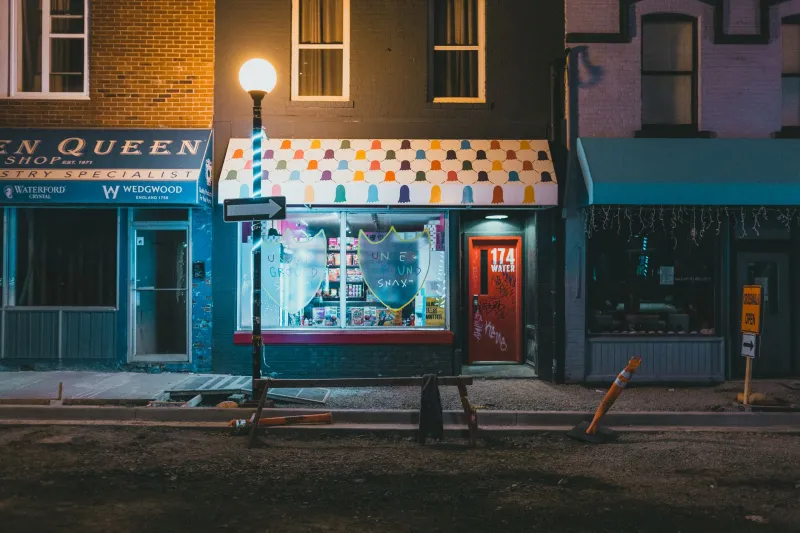
Walk down certain stretches of Broad Street or cut through some of Augusta's older commercial corridors on a Saturday morning, and you might notice something unexpected: a storefront that was dark last week is suddenly alive with string lights, handmade signage, and a line of curious neighbors waiting to get inside. No grand opening banners. No long-term lease. Just a local entrepreneur with a concept, a short-term rental agreement, and a whole lot of hustle.
Augusta's pop-up business scene has been quietly building momentum for a few years now, but lately it feels like something has shifted. What started as an occasional weekend market or a holiday gift shop experiment has evolved into a genuine economic strategy — one that's filling gaps in the retail landscape while giving first-time business owners a low-stakes runway to test their ideas.
The Empty Storefront Problem (and a Creative Fix)
Like a lot of mid-sized American cities, Augusta has wrestled with commercial vacancy for years. Retail shifts, pandemic-era closures, and changing consumer habits have left pockets of empty space throughout the city's commercial districts. Property owners are often caught in a tough spot — long-term tenants are hard to land, and sitting on vacant space costs money.
Pop-up retail has emerged as a practical middle ground. Short-term leases or licensing arrangements let entrepreneurs move in for a few weeks or months without the financial commitment of a traditional storefront. Property owners get some income and foot traffic. Neighborhoods get activity. And entrepreneurs get something genuinely valuable: real-world feedback before they go all-in.
Tasha Greer, who launched a natural skincare line called Rosewood & Root out of a temporary space near the Laney-Walker corridor last spring, put it simply. "I'd been making products in my kitchen for two years. I knew people liked them at farmers markets, but I had no idea if I could actually run a shop," she said. "The pop-up gave me three months to figure that out without betting everything on a five-year lease."
She sold out of her initial inventory in the first six weeks. By month three, she was negotiating a permanent space.
More Than a Retail Trend
What's interesting about Augusta's pop-up moment is that it's not just about retail. The temporary spaces that are popping up across the city are functioning as something closer to community hubs — places where neighbors who might not otherwise cross paths end up in the same room.
Marcus Webb runs a rotating creative market called The Fold that takes over a vacant commercial space in South Augusta every other weekend. The concept is simple: local makers, artists, food vendors, and small-batch producers share the floor for two days. But the energy it generates has surprised even him.
"People stay longer than I expected," Marcus said. "They come for one vendor and end up talking to five others. I've watched collaborations start right there on the floor. Two vendors will meet, swap cards, and the next time I see them they're working on something together."
That kind of spontaneous connection is hard to manufacture, and it's exactly the sort of thing that makes a neighborhood feel alive. The Fold has drawn visitors from neighborhoods across Augusta — and more than a few from the South Carolina side of the river — simply through word of mouth and social media.
A Rising Tide for Neighboring Businesses
One of the less obvious benefits of pop-up activity is what it does for the permanent businesses nearby. Foot traffic, it turns out, doesn't stay contained to a single storefront.
DeShawn Okafor owns a barbershop two doors down from a spot that's hosted three different pop-ups over the past year. He didn't think much of it at first. "I figured it was just some weekend thing, wouldn't really affect me," he admitted. But after the first event brought a crowd to the block, he started noticing new faces in his shop — people who'd never been to that part of the street before.
"Now when I see somebody setting up in that space, I actually get excited," he said, laughing. "It means I'm going to have a good weekend."
This kind of spillover effect is something urban planners have studied in larger markets, but it's playing out organically here in Augusta. When a block has energy, people explore. When people explore, they spend money. It's not complicated — but it requires someone to get the ball rolling.
Lowering the Drawbridge on Business Ownership
Perhaps the most significant thing about Augusta's pop-up economy is what it means for who gets to be a business owner. Traditional retail has always carried steep barriers to entry: security deposits, build-out costs, long lease commitments, licensing fees. For many aspiring entrepreneurs — particularly those without access to capital or established credit — those barriers are simply too high.
Pop-up models compress the risk dramatically. A vendor can test a concept for a few hundred dollars instead of tens of thousands. They can fail fast, adjust, and try again. Or they can succeed and use the proof of concept to attract investors or secure a more permanent location.
Local organizations have started to recognize this and build around it. A handful of Augusta-area nonprofits and development groups have begun facilitating pop-up access specifically for entrepreneurs from underserved communities, helping navigate the logistics of temporary retail and connecting participants with mentorship resources.
The goal, as one program coordinator described it, is to make the on-ramp to business ownership accessible enough that more people can actually get on the highway.
What Comes Next
Nobody expects pop-ups to replace traditional retail. But in a city that's actively working to strengthen its commercial corridors and diversify its economic base, they're proving to be a surprisingly powerful tool.
The entrepreneurs running these temporary spaces are doing more than selling products. They're building customer bases, sharpening their business instincts, and contributing to the kind of street-level vitality that makes a neighborhood worth investing in — for everyone.
Augusta has always had people with good ideas and the drive to make something happen. The pop-up model is giving more of them a real shot at doing exactly that. And if the last couple of years are any indication, a lot of what starts as temporary around here has a way of becoming something much more permanent.
Keep an eye on those storefronts. Something good might be brewing.