Green Roots, Stronger Neighborhoods: How Augusta's Outdoors Is Healing the Whole City
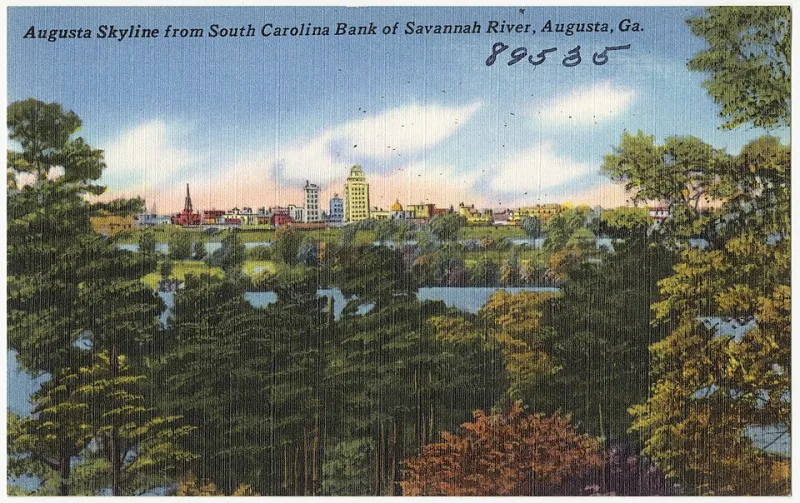
Photo: Boston Public Library, Public domain, via Wikimedia Commons
There's something that happens when you put people near water. Conversations open up. Strangers become neighbors. A Tuesday morning paddle on the Savannah River stops being just exercise and starts feeling like something more — like belonging.
That quiet transformation is playing out across Augusta in ways both big and small. Community organizations, local health advocates, and grassroots groups are tapping into what Augusta has always had in abundance: natural beauty, open space, and a river that's been the backbone of this city since before it had a name. And increasingly, they're turning those assets into something that addresses one of the most pressing challenges of modern urban life — disconnection.
The River as a Meeting Place
Ask anyone who's spent time along the Augusta Riverwalk on a warm Saturday morning, and they'll tell you it feels different from the rest of the city. There's a slower rhythm there. People linger. Kids chase each other along the waterfront while parents swap stories on benches overlooking the Savannah.
For years, the Riverwalk has been a beloved landmark. But more recently, it's become an anchor for programming that goes well beyond a casual stroll. Local paddling clubs have drawn hundreds of residents — many of them first-timers — into kayaking and canoeing experiences that double as stress relief and social connection. Riverside markets have brought together small vendors, local farmers, and shoppers in a setting that feels less transactional and more like a neighborhood gathering.
"People don't realize how much the river can give back," said one Augusta-based environmental advocate who has helped organize waterway cleanup events that have grown into regular community meetups. "You start with picking up trash, and you end up with friendships. That's not an accident — that's what shared purpose does."
The economic ripple effects are real, too. Foot traffic along the waterfront supports nearby businesses, and events that draw people to the river corridor create demand for local vendors and service providers. Nature, it turns out, is good for the bottom line.
Parks as Prescription
Across Augusta's neighborhoods, the conversation around green space has shifted. It's no longer just about aesthetics or recreation — it's about health equity. Access to parks and outdoor programming is increasingly recognized as a public health issue, and local organizations are responding.
Community health initiatives have begun incorporating nature-based activities as part of broader wellness efforts, partnering with parks departments to offer free fitness classes, walking groups, and youth programming in outdoor settings. The logic is straightforward: green spaces lower barriers to physical activity, reduce stress, and create informal networks of social support that formal health systems often can't replicate.
For residents in neighborhoods that have historically had less access to quality green space, these efforts carry extra weight. "It's not enough to have a park on a map," noted one community organizer working in Augusta's south side. "It has to feel safe, welcoming, and like it's actually for you. That's the work — making sure everyone has a place outside that feels like theirs."
Efforts to improve park infrastructure, add lighting, and program regular events in underserved areas are gaining momentum, supported by a mix of city investment, nonprofit energy, and plain old community hustle.
Outdoor Economy, Augusta Style
Nature-based community programming isn't just a feel-good story — it's an economic development strategy. Cities across the country have learned that investing in outdoor amenities and green infrastructure pays dividends in tourism, talent attraction, and quality of life metrics that influence where people choose to live and work.
Augusta is waking up to that reality. The same Riverwalk that hosts weekend kayakers also draws visitors who spend money at local restaurants and shops. The farmers markets and outdoor festivals that fill green spaces throughout the warmer months support small business owners and create visibility for local makers and growers. And the growing reputation of Augusta as a city with genuine outdoor character — not just a golf tournament destination — is beginning to attract a new kind of resident: one who wants urban amenities alongside accessible nature.
Local business owners near green corridors have noticed. "When the park has something going on, we feel it," said one shop owner near a popular Augusta green space. "People come for the event and they stop in. That energy matters."
Connection Is the Point
Maybe the most important thing happening along Augusta's riverbanks and in its parks isn't measurable in economic terms at all. It's the slower, harder-to-quantify work of building social trust — the kind that happens when people share a picnic table, cheer for a kid learning to cast a fishing line, or just wave at a familiar face on a morning walk.
Public health researchers have spent years documenting the toll of social isolation, particularly in urban communities. The antidote, increasingly, looks a lot like what Augusta's outdoor advocates have been building: consistent, accessible, low-barrier opportunities for people to be together in spaces that feel good.
"We talk a lot about community, but community doesn't happen in a meeting room," said one longtime Augusta civic leader. "It happens outside, in the in-between moments. The river gives us those moments."
There's a version of Augusta's future where the Savannah River isn't just a backdrop — it's a lifeline. Where parks aren't afterthoughts but central infrastructure. Where the simple act of going outside, together, is understood as one of the most powerful investments a city can make in itself.
That future is already being built, one kayak launch and riverside market and neighborhood walking group at a time. Augusta's soul has always been tied to this land and this water. The people here are just remembering that — and building something lasting because of it.