Stronger Together: The Unlikely Alliances Cracking Augusta's Toughest Problems
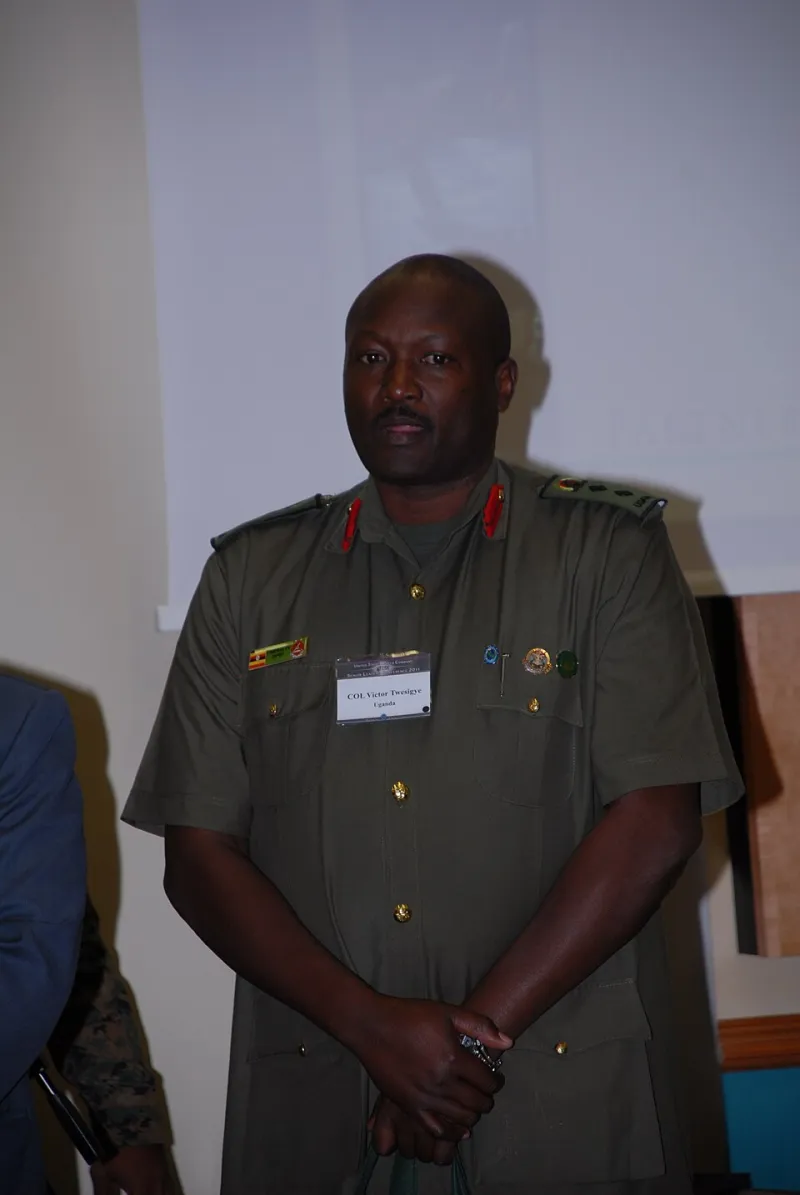
Photo: US Army Africa from Vicenza, Italy, CC BY 2.0, via Wikimedia Commons
There's a version of Augusta where every problem gets handed off to whoever seems most responsible for it — government handles city services, businesses chase profit, nonprofits patch the gaps, and community groups wave signs until someone listens. That version exists, sure. But alongside it, something more interesting has been taking shape. A growing number of people here have figured out that the hardest problems don't respect organizational boundaries. And they've started acting accordingly.
The result? A set of cross-sector collaborations that are quietly — sometimes loudly — changing the way Augusta functions. Not because everyone suddenly agreed on everything, but because enough people got tired of watching the same issues cycle through without resolution.
When No One Sector Has the Answer
Let's be honest about why these partnerships form in the first place. It's rarely because someone had an inspired vision of unified civic harmony. More often, it's because an organization hit a wall. A city agency ran out of leverage. A nonprofit ran out of bandwidth. A business realized that a struggling neighborhood meant a struggling customer base. Frustration, it turns out, is a pretty reliable catalyst for collaboration.
What Augusta has been learning — sometimes the hard way — is that workforce shortages, housing instability, food access gaps, and public safety challenges are all braided together. Pull one thread and you're already touching three others. That reality has pushed leaders from different sectors to stop treating their work as separate lanes and start thinking about shared infrastructure.
The organizations doing this well aren't just co-signing each other's press releases. They're sharing data, pooling resources, making joint decisions, and — critically — agreeing ahead of time on what success actually looks like.
Trust Is the Real Foundation
Ask anyone who has tried to build a cross-sector partnership what the hardest part was, and they'll almost never say funding. They'll say trust.
Business leaders and nonprofit directors often come from entirely different professional cultures. Government agencies move on timelines that can make private-sector partners want to pull their hair out. Community organizations, especially those rooted in historically underserved neighborhoods, have every reason to be skeptical when institutions show up promising partnership. That skepticism isn't a bug — it's earned, and it deserves to be respected.
The collaborations that have worked in Augusta share a few things in common. They started with listening before pitching. They kept early commitments, even small ones. They made sure that community voices weren't just consulted but actually shaped direction. And they built in enough transparency that partners could see what was happening with shared resources and decisions.
That kind of trust-building takes time. It's not glamorous. It doesn't generate a lot of headlines. But it's the load-bearing wall of everything that follows.
Case Study: Workforce Pipelines Built Across Sectors
One of the clearest examples of this model in action has been Augusta's approach to workforce development. The challenge was real and well-documented: local employers couldn't find workers with the skills they needed, while job seekers struggled to access training that led to actual employment. Both problems existed simultaneously, which should've been absurd — but it was just the reality.
What changed the equation was a deliberate effort to get employers, training providers, community colleges, city agencies, and neighborhood organizations into the same room with a shared goal: build pipelines that actually connect. Employers got to shape curriculum. Training providers got clearer signals about what skills mattered. Community organizations helped identify and remove the non-skill barriers — transportation, childcare, housing instability — that were quietly killing people's ability to complete programs in the first place.
No single organization could've solved that alone. A business can't fix childcare gaps. A nonprofit can't guarantee job placement at scale. A city agency can't redesign private-sector training on its own. But together, with clear roles and real accountability, the pieces started fitting.
Structural Changes That Make It Stick
Here's what separates a collaboration that lasts from one that fizzles after the initial energy wears off: structure.
The best partnerships Augusta has produced aren't just based on goodwill and shared values — though those help. They're built on agreements about governance, decision-making, data sharing, and what happens when things go sideways. They have designated people whose job it is to manage the relationship, not just the programs. They build in regular checkpoints that don't just celebrate wins but honestly assess what isn't working.
That kind of intentional scaffolding sounds dry, but it's what keeps a collaboration alive through leadership transitions, budget pressures, and the inevitable moments when partners disagree. And partners always disagree eventually. The question is whether the structure can hold when that happens.
Some of Augusta's most durable multi-sector efforts have also been deliberate about equity — specifically, making sure that the communities most affected by a problem have real power in the solution. That's a harder design challenge than it sounds, but the collaborations that get it right tend to produce outcomes that actually hold up over time.
Augusta as a Model — and What That Really Means
There's been some outside attention on what Augusta has been building here. Regional observers and peer cities have started paying closer attention to how cross-sector work gets done on the ground. That's worth acknowledging — but it's also worth keeping in perspective.
Being a model doesn't mean having it all figured out. Augusta's collaborative landscape still has gaps, still has sectors that don't talk to each other as well as they should, still has initiatives that launched with fanfare and stalled quietly. The honest version of this story includes those chapters too.
What Augusta does have is a growing cohort of people — across government, business, the nonprofit world, and neighborhood organizations — who believe that working across boundaries is worth the messiness. Who have done it enough times to know what it actually requires. And who are, slowly, building the kind of institutional muscle memory that makes the next collaboration a little easier than the last.
The Work Ahead
If Augusta wants to keep deepening this capacity, a few things probably need to happen. More investment in the connective tissue — the intermediary organizations, the backbone structures, the relationship infrastructure — that makes collaboration possible. More willingness to fund trust-building and coordination, not just programs. And more honest public conversation about what cross-sector work actually demands, so that leaders coming up in every sector understand it as a core skill, not an optional add-on.
The problems Augusta faces — like every American city — are too complex for any one organization to solve. The bridge builders who've figured that out, and who've done the hard work of actually building those bridges, are some of the most important people in this city. They just don't always get called that.
They should.